
University of Oxford (UK) in 2025: A Complete Guide for Students
Introduction
Deciding where to study is one of the most important choices in a student’s life, and for many, the University of Oxford stands as the ultimate symbol of academic distinction. Ranked consistently among the top universities worldwide, Oxford blends centuries of tradition with cutting-edge research and global leadership opportunities.
Oxford represents more than just an institution; it symbolizes a heritage. Nestled in the historic city of Oxford, England, it offers a unique academic culture where ancient traditions meet modern innovation. From tutorial-based learning to world-leading research, Oxford provides a platform that shapes thinkers, leaders, and changemakers.
In 2025, Oxford remains a magnet for some of the most brilliant students from around the globe. However, its highly competitive admissions, visa processes, tuition fees, and scholarships require careful planning. This guide provides an in-depth overview for both domestic and international students aiming to study at Oxford in 2025.
Historical Highlights & Social Initiatives
Established in the twelfth century, Oxford holds the title of the oldest university in the English-speaking world. With more than 900 years of history, it has played a pivotal role in shaping intellectual, cultural, and political landscapes.
Key Contributions Over the Centuries:
-
The birthplace of revolutionary theories in physics, economics, and philosophy.
-
Research breakthroughs in medicine, vaccines, and artificial intelligence.
-
A strong influence on law, politics, and global policy-making.
Oxford’s alumni list includes 30 British Prime Ministers, over 70 Nobel Prize winners, global leaders, and pioneering innovators. Its alumni network of over 300,000 continues to drive innovation and policy worldwide.
Equally significant is Oxford’s dedication to social progress. The university invests heavily in sustainability, diversity, and widening participation. Initiatives such as the Oxford Sustainability Strategy and Oxford Bursary Scheme ensure inclusivity and long-term community impact.
Why Choose Oxford in 2025?
Oxford consistently ranks in the global top 5 in QS and Times Higher Education rankings. Its unique teaching style, rigorous academics, and global recognition make it one of the most sought-after institutions.
Reasons Oxford Stands Out:
-
Global Prestige: Employers and academics worldwide view an Oxford degree as a symbol of intellectual excellence.
-
Tutorial System: Small-group teaching (one-to-one or two-to-one) fosters critical thinking and personalized learning.
-
Research Powerhouse: Billions are invested annually in research, particularly in medicine, climate science, and AI.
-
Location Advantage: Oxford is just an hour from London, giving students access to financial, cultural, and tech hubs.
-
Networking Opportunities: The alumni network spans politics, business, science, and the arts.
-
Cultural Diversity: Students from over 150 countries create a vibrant global community.
Benefits for Students (Domestic & International)
For All Students
-
Prestige & Recognition: An Oxford degree opens doors worldwide.
-
Career Services: The Careers Service connects students with internships, employers, and global opportunities.
-
Extracurriculars: Hundreds of clubs, societies, and sports offer opportunities beyond academics.
-
Cultural Richness: Oxford’s historic setting provides museums, theaters, music, and entrepreneurial hubs.
For International Students
-
Visa Guidance: Oxford supports Tier 4 (Student Route) visa applications, including CAS issuance and visa workshops.
-
Cultural Adjustment Support: The Oxford Student Union and International Office organize events and mentoring.
-
Housing Options: College-based housing guarantees accommodation for first-year undergraduates.
For U.K. Students
-
Financial Support: Generous bursaries and scholarships ensure access regardless of background.
-
Home Advantage with Global Exposure: British students experience international diversity without leaving the UK.
Best Programs Compared to Other Universities
Oxford excels across multiple disciplines:
-
Humanities: Ranked #1 globally in English, Philosophy, and History.
-
Medicine: The Oxford Medical School leads in clinical research and global healthcare innovation.
-
Law: The Faculty of Law consistently ranks among the top worldwide.
-
Sciences: Oxford contributes pioneering work in chemistry, physics, and climate science.
-
Social Sciences: Economics, Politics, and International Relations are highly influential worldwide.
Unlike most universities, Oxford integrates interdisciplinary research with its traditional college system, fostering intellectual growth and innovation.
Degree Programs You Can Choose From
Undergraduate Degrees
Oxford primarily offers Bachelor of Arts (BA) degrees, even in sciences, though many later convert to Master of Arts (MA). Popular subjects include:
-
Philosophy, Politics & Economics (PPE)
-
Law (Jurisprudence)
-
Medicine
-
Computer Science
-
Engineering Science
-
English Language & Literature
-
History
-
Biology
The tutorial system allows students to engage deeply with subjects, often across disciplines.
Graduate Degrees
Oxford offers a wide range of master’s and doctoral programs, including:
-
MBA at Saïd Business School
-
BCL/MJur (Law) at the Faculty of Law
-
MSc in Computer Science, Data Science, and AI
-
MPhil & DPhil (PhD equivalents) in sciences, arts, and humanities
-
MPP (Master of Public Policy) at the Blavatnik School of Government
-
MD/PhD Programs for advanced medical research
Admission Deadlines (2025–26 Entry)
-
UCAS Application (all undergraduate students): October 15, 2024
-
Admission Tests (e.g., LNAT, MAT, TSA, BMAT): November 2024
-
Interviews: December 2024
-
Decision Letters: January 2025
-
Graduate Programs: Vary by department, typically December 2024 – January 2025
Step-by-Step Application Process at Oxford (2025)
For U.K. Students
-
Choose a Course: Explore Oxford’s 50+ undergraduate options.
-
UCAS Application: Submit by October 15.
-
Admission Test: Complete subject-specific tests (e.g., MAT for Mathematics, LNAT for Law).
-
Written Work: Submit essays if required by your subject.
-
Interview: Participate in Oxford’s rigorous tutorial-style interviews.
-
Decision: Offers released in January.
-
Funding & Bursaries: Apply for financial aid through Oxford’s support system.
For International Students
-
Check Eligibility: Verify qualifications (A-levels, IB, APs, or equivalents).
-
English Proficiency: IELTS or TOEFL required unless English is your first language.
-
UCAS Application: Submit with transcripts and references by October 15.
-
Admission Tests: Take subject-specific assessments.
-
Interview: Online or in-person interview.
-
Offer & CAS Issuance: Confirmation and visa support from Oxford.
-
Visa Application: Tier 4 Student Visa; submit CAS, financial proof, and attend an interview.
-
Processing Time: Usually 3–6 weeks, but students are advised to apply early.
-
Work Rules: 20 hours per week during term; full-time during vacations. Post-study work available under the UK Graduate Route (2 years, extendable for PhD).
Tuition Costs & Accommodation (2025–26 Estimate)
-
Undergraduate Tuition:
-
Home Students: £9,250 per year
-
International Students: £29,000–£44,000 depending on course (Medicine on higher end)
-
-
Graduate Tuition: £15,000–£45,000 depending on program
-
Living Costs: £12,000–£18,000 annually (housing, food, books, personal expenses)
Accommodation
-
College Housing: First-years are guaranteed housing in their college.
-
Graduate Housing: Some available through colleges or university, though many students live off-campus in Oxford city.
Scholarships & Financial Aid
Oxford offers a range of scholarships:
-
Oxford Bursary Scheme: For UK students from low-income households.
-
Rhodes Scholarship: Prestigious award for outstanding international students.
-
Clarendon Fund: Comprehensive scholarships available for postgraduate learners around the globe.
-
Reach Oxford Scholarships: Designed for individuals hailing from economically disadvantaged nations.
Oxford upholds a promise to inclusivity and offers support based on both financial needs and academic achievements.
Student Life & Part-Time Work
Life at Oxford balances tradition with modern student culture:
-
Societies & Clubs: Over 400 societies including debating, arts, and sports.
-
Athletics: Oxford is famous for its rivalry with Cambridge, especially the annual Boat Race.
-
City Life: A mix of historic charm and modern vibrancy, filled with cafés, libraries, theaters, and innovation hubs.
-
Work Opportunities: On-campus roles in libraries, dining halls, and research labs. Many students also secure internships in London.
Oxford’s Campus and Where You’ll Study
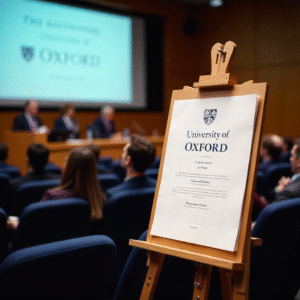
Oxford operates as a collegiate institution comprising 39 individual colleges, accompanied by 6 established private halls. Each college offers accommodation, meals, libraries, and fosters a strong sense of community.
The main university facilities include:
-
Bodleian Library: One of the largest libraries in the world.
-
Oxford Science Park: A hub for innovation and entrepreneurship.
-
Global Reach: Oxford collaborates with research centers worldwide and offers Oxford Online programs.
Life at Oxford: Beyond Academics
Oxford’s student life is unique:
-
Formal dining traditions (hall dinners in gowns).
-
World-class cultural and social events.
-
Opportunities to engage in public service, Model UN, hackathons, and start-up ventures.
Size & People
-
Total Students: ~26,000 (12,000 undergraduates + 14,000 graduates)
-
International Students: ~45%
-
Faculty: Includes Nobel laureates, Fields Medalists, and global leaders in academia.
Global Rankings 2025
-
QS World Rankings 2025: Top 2
-
Times Higher Education 2025: #1 globally
-
Subject Strengths:
-
Humanities: #1
-
Medicine: Top 2
-
Law: Top 3
-
Sciences: Top 5
-
Governance & Leadership
The leadership of Oxford is comprised of its Chancellor, Vice-Chancellor, and the Congregation (the university’s academic assembly). Each college possesses its own governing authority. Student representation is provided through the Oxford University Student Union (OUSU).
Practical Tips to Succeed at Oxford
-
Apply Early: UCAS closes in October, months earlier than most universities.
-
Prepare for Interviews: Practice critical thinking and analytical discussions.
-
Budget Carefully: Oxford city is costly; plan housing and living expenses wisely.
-
Engage Fully: Take advantage of societies, sports, and research opportunities.
-
Use Resources: Libraries, academic advisors, and career services are invaluable.
Real-World Impact of an Oxford Education
An Oxford education goes far beyond a degree. Alumni have shaped nations, founded companies, and driven research that transforms lives.
Examples include:
-
Politics: Multiple UK Prime Ministers and global leaders.
-
Science: Breakthroughs in vaccine development and climate research.
-
Business & Tech: Alumni in leadership roles at multinational corporations and start-ups.
Honest Tips Before You Apply
-
Be Genuine: Oxford values intellectual curiosity over polished perfection.
-
Don’t Fear Costs: With scholarships and bursaries, Oxford can be more affordable than expected.
-
Prepare for Intensity: Balancing academics with college life requires discipline.
-
Seek Guidance: Reach out to current students and alumni for valuable advice.
Conclusion: Is Oxford Right for You?
The University of Oxford is more than just an academic institution—it is a tradition, a community, and a launching pad for global leaders. With unmatched teaching methods, extensive resources, and a world-class alumni network, Oxford equips students to make a real impact.
Studying at Oxford is demanding, but the rewards extend far beyond graduation. If you’re seeking a place where history meets innovation, diversity fuels ideas, and education transforms into leadership, Oxford in 2025 may be the perfect choice for you.