
Imperial College London (UK) 2025: An All-inclusive Guide for Students
Introduction
Deciding where to study is one of the most important choices you’ll make in life, and if your sights are set on the UK, Imperial College London should be on your radar. Ranked among the top 10 universities globally, Imperial isn’t just about earning a degree—it’s about stepping into a world of discovery, innovation, and career-defining opportunities.
No matter if your interests are in science, engineering, healthcare, or commerce, Imperial provides advanced courses, top–notch research amenities, and a lively global community.
Navigating admissions, deadlines, tuition, and visas can seem daunting, but this guide will break it down step by step, making it easy for both UK and international students to understand what it takes to study at one of the world’s most prestigious institutions in 2025.
Historical Highlights & Social Initiatives
Founded in 1907, Imperial College London emerged from the Royal College of Science, Royal School of Mines, and the City & Guilds College. Its legacy traces back to the Royal College of Chemistry in 1845, making it a historic hub for scientific innovation. Over the years, Imperial has grown into a global research powerhouse, continually expanding its South Kensington campus and developing modern facilities like the White City Innovation Hub.
Imperial is also deeply committed to social initiatives. The university promotes equality, diversity, and inclusion, offering scholarships for underrepresented students and actively participating in global research partnerships. Initiatives include collaborations with India and other nations to foster international research, entrepreneurship, and social development projects.
Why Choose Imperial College London?
Imperial isn’t just another university—it’s a community of problem-solvers. In 2025, it ranked 2nd in the world (QS Global Rankings), even ahead of Oxford and Cambridge. That’s a big deal.
Here’s why students love Imperial:
-
World-Class Reputation: Known for science, engineering, medicine, and business.
-
London Location: Study in one of the most vibrant and global cities in the world.
-
High Graduate Earnings: Imperial graduates earn an average of £46,000+ five years after graduation, one of the highest in the UK.
-
Research & Innovation: From AI to climate science, Imperial is driving change.
If you’re passionate about creating solutions that make an impact, Imperial gives you the platform to do it.
Benefits for Students (Home & International)
Studying at Imperial gives you more than just a degree—it shapes your future.
-
Global Recognition: Employers worldwide respect an Imperial degree.
-
Networking: You’ll meet people from over 140 countries—your future collaborators, co-founders, and friends.
-
Career Support: Imperial’s career service connects you to internships and jobs at companies like Google, Goldman Sachs, and NASA.
-
London Life: From internships in the City to weekends in Hyde Park, studying in London is an adventure in itself.
-
High Graduate Salaries: Imperial grads earn among the highest salaries in the UK.
For international students, Imperial provides visa support, cultural societies, and housing options to help you feel at home. For UK students, bursaries and lower fees make world-class education more affordable.
Best Courses Compared to Other Universities
Imperial excels in:
-
Engineering: Chemical, Mechanical, Aerospace, Civil
-
Medical & Life Sciences: Medicine, Biomedical Engineering, Biological Sciences
-
STEM-Integrated Business: Entrepreneurship, Data Analytics, Finance, Management
Compared to other universities, Imperial’s focus on STEM-business integration and real-world problem-solving gives students a competitive advantage in research and industry.
Degree Programs at Imperial
Imperial offers degrees across four main faculties:
-
Faculty of Engineering – Civil, Mechanical, Computing, Aeronautics.
-
Faculty of Natural Sciences – Physics, Chemistry, Life Sciences, Mathematics.
-
Faculty of Medicine – Medicine (MBBS), Biomedical Sciences, Public Health.
-
Imperial College Business School – Management, Finance, MBA, Analytics.
Whether you’re into robotics, medicine, space science, or business leadership, Imperial has a program tailored for you.
Best Courses & Academic Reputation
Imperial is renowned for its rigorous programs in:
-
Engineering: Aerospace, Civil, Electrical, Mechanical, and Bioengineering.
-
Medicine: MBBS, Biomedical Sciences, and related fields.
-
Natural Sciences: Physics, Chemistry, Mathematics, and Life Sciences.
-
Business: Finance, Management, and MBA programs.
The university’s emphasis on research-led teaching and real-world application ensures graduates are well-prepared for global careers.
Admission Deadlines (2025–26 Entry)
Knowing deadlines is crucial—miss them, and you’re out for the year.
Undergraduate (via UCAS):
-
15 October 2025 – Medicine (MBBS).
-
14 January 2026 – All other undergraduate courses.
Postgraduate:
-
Business School Master’s: 9 January 2025 (for scholarships).
-
Deadline for Other Postgraduate Courses: 16 January 2025 (consideration for priority funding).
-
Final Deadline (Visa Applicants): 30 June 2025.
-
General Deadline (UK students): 1 August 2025.
Tip: Apply early if you want to be considered for scholarships. Imperial is competitive, and funding often goes to early applicants.
Application Process
Undergraduate Students
-
UK Students: Apply through UCAS; maximum five choices per application.
-
International Students: Same UCAS process applies, but additional documents are required for visa purposes.
Key deadlines:
-
Equal consideration: 14 January 2026
-
Medicine (MBBS): 15 October 2025
Entry requirements: High academic achievement, personal statement, references, and sometimes admissions tests (e.g., TMUA, ESAT).
Postgraduate Students
-
Apply through the My Imperial portal with personal statements, references, transcripts, and occasionally interviews.
-
Deadlines vary by program.
- https://www.ucas.com/
Bank Statements & Financial Proof (International Students)
International students must provide bank statements demonstrating sufficient funds:
-
Funds must remain inactive for a period of 28 continuous days within the 31 days leading up to the application.
-
Must cover tuition and living costs.
-
Declarations need to be certified and in English (translated if required).
- https://www.imperial.ac.uk/study/international-students/
Visa Processing
-
UK Student Visa: Required for international students.
-
Standard process includes submitting offer letter, financial evidence, passport, and visa application.
-
Processing times vary by country, typically 3–8 weeks.
-
You are permitted to work part-time: Up to 20 hours each week during the semester and full-time during breaks.
Tuition Costs & Accommodation
-
Tuition fees vary by program:
-
Undergraduate (UK/EU): £9,250/year
-
Undergraduate (International): £31,750–£36,000/year
-
Postgraduate: £32,000–£45,000/year (varies by program)
-
-
Accommodation: Guaranteed for first-year students; includes halls and private options.
-
Living costs: London is expensive; budget around £12,000–£15,000/year for housing, food, transport, and personal expenses.
Yes, it’s expensive—but remember, scholarships and bursaries can help reduce costs significantly.
Scholarships and Financial Aid
Imperial offers scholarships for both home and international students. Here are some key ones for 2025:
For Home Students:
-
Imperial Bursary – Awards up to £5,000 yearly based on family financial situation.
-
Anas M Tannir Scholarship – £14,000 maintenance grant.
-
Cowrie Foundation Scholarship – Funds tuition and provides an additional £10,000 for living costs.
For International Students:
-
GREAT Scholarships – £15,000 toward postgraduate study.
-
Commonwealth Shared Scholarship – Covers tuition, airfare, and living stipend.
-
Beacon Scholarship – For leadership and academic excellence.
-
TEV UK-Imperial Scholarships – Targeted at Turkish students.
-
Imperial Undergraduate Scholarship (2025/26) – Up to £20,000 per year.
Tip: Tailor your scholarship application with your personal story, passion, and future goals. Numbers matter, but so does your journey.
Student Life & Part-Time Work
-
Vibrant campus life with clubs, societies, and student unions.
-
International students can work part-time legally while studying (20 hours/week max).
-
Opportunities for research assistantships, internships, and entrepreneurial ventures.
Imperial Campuses: Where You’ll Study
South Kensington – The Main Campus
The heart of Imperial lies in South Kensington, surrounded by the Natural History Museum, Hyde Park, and Royal Albert Hall. Imagine finishing lectures and then stepping into a world-class museum just across the street. This campus hosts most undergraduate and postgraduate programs.
White City – Innovation District
Imperial’s White City campus is designed for entrepreneurship, biotech, and innovation. It’s packed with research labs, incubators, and start-up hubs—perfect if you dream of launching a company or working on cutting-edge technology.
Silwood Park – Nature Meets Science
Located in Berkshire, Silwood Park is home to ecological and environmental research. If you’re passionate about sustainability and climate solutions, this campus feels like studying in a living lab.
Medical Campuses
Imperial’s medical students are based across several hospitals in London, including:
-
St Mary’s Hospital
-
Hammersmith Hospital
-
Chelsea & Westminster Hospital
This means you won’t just learn in classrooms—you’ll practice in real-world hospital environments from day one.
Size & People
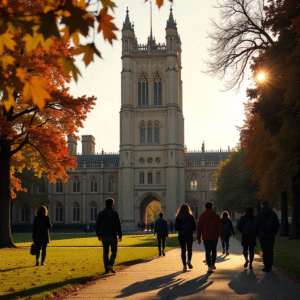
Approximately 22,000 students and 8,000 staff members, including leading researchers and educators, make up Imperial’s community.
Its international diversity is striking—over 60% of students are from outside the UK, representing more than 140 countries. This multicultural environment creates a vibrant academic community and a rich exchange of ideas.
Academics & Reputation
Imperial College London excels particularly in STEM fields—science, technology, engineering, and mathematics—while also offering strong programs in business and management. The university is known for blending rigorous academic training with practical, real-world application. Facilities like the Enterprise Lab support student startups, with an impressive 79% survival rate for launched ventures, showcasing the university’s entrepreneurial edge.
Imperial’s reputation is built on innovative research, high-impact publications, and collaborations with industry leaders. It consistently produces graduates who are highly employable and in demand worldwide.
Global Rankings 2025
Imperial College London consistently ranks among the world’s premier universities. Notable 2025 rankings are:
-
QS World University Rankings 2025: 2nd in the world
-
Times Higher Education 2025: 3rd in Europe, 9th worldwide
-
Subject-specific rankings:
-
Chemical Engineering: 9th globally
-
Medicine: 7th globally
-
Mechanical Engineering: 9th globally
-
Biological Sciences: 10th globally
-
Computer Science: 8th globally
-
Life Sciences: 13th globally
-
The Imperial Business School also stands out for entrepreneurship, analytics, finance, and management programs, ranking among the top business schools in Europe.
Governance & Leadership
The governance at Imperial is overseen by a Council and is divided into four faculties: Engineering, Medicine, Natural Sciences, and Business. The leadership is led by President Professor Hugh Brady, who ensures the university’s strategic vision and educational quality. The institution prioritizes collaborative governance, encouraging student involvement and faculty input in determining key institutional objectives.
Practical Tips to Succeed at Imperial
-
Apply Early: Scholarships and competitive courses fill fast.
-
Plan Finances: Break fees into monthly budgets—you’ll see it’s manageable with planning.
-
Use Resources: Take advantage of Imperial’s libraries, labs, and career fairs.
-
Balance Life: Join student societies—sports, music, cultural clubs—to avoid burnout.
-
Network: Connections with professors, alumni, and colleagues can create pathways to future possibilities.
Conclusion: Is Imperial Right for You?
Imperial College London offers more than just a top-tier education—it provides a platform to challenge yourself, innovate, and prepare for a global career. With its unmatched reputation in STEM and business, strong international community, and extensive research and entrepreneurship opportunities, Imperial equips students for success on a global scale.
Yes, the application process is competitive and costs can be significant, but with careful planning, scholarship opportunities, and dedication, studying at Imperial is within reach. By understanding deadlines, preparing documents in advance, and taking advantage of the university’s resources, you can turn your dream of studying in London into a reality in 2025.
Imperial is more than a university—it’s a launchpad for future leaders, innovators, and problem-solvers ready to make a difference in the world.