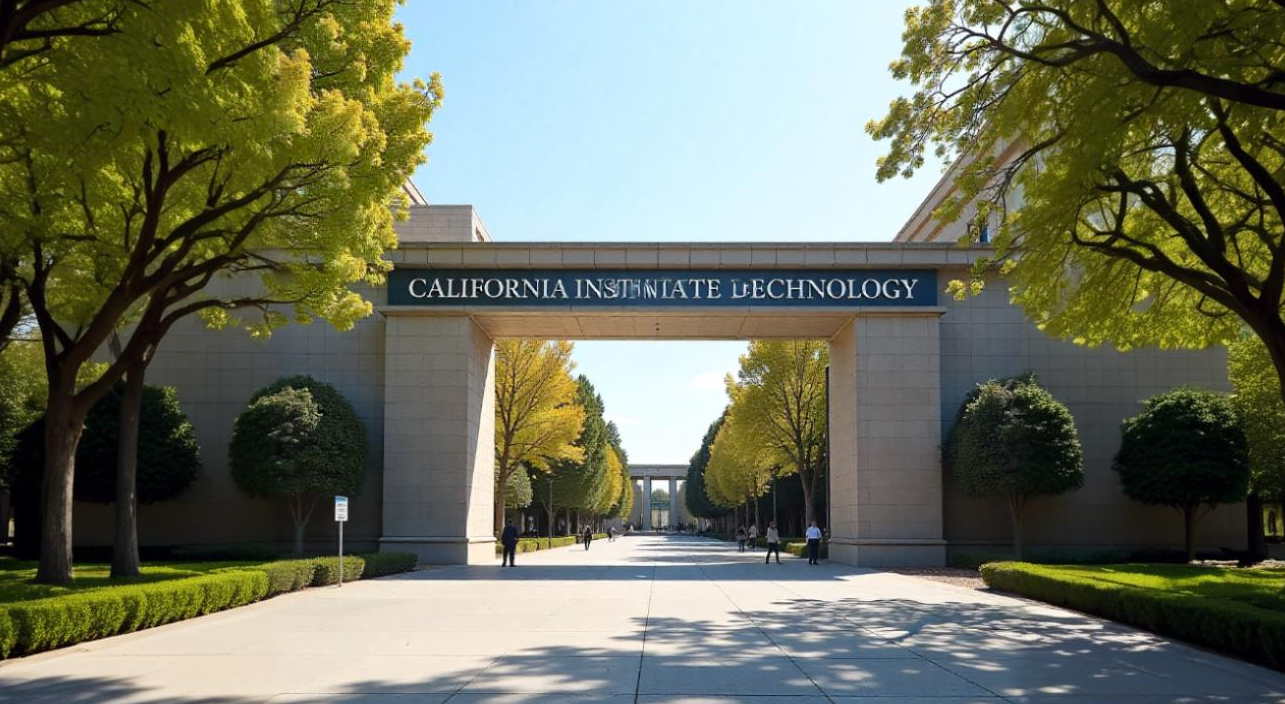
California Institute of Technology (Caltech) USA: The Complete 2025 Student Guide
Introduction: Why Caltech is a Global Leader in Innovation
The California Institute of Technology (Caltech), founded in 1891 in Pasadena, California, is globally recognized for excellence in science, engineering, and research. Though it has a small student body of around 2,400, its influence is enormous, having produced Nobel laureates, pioneering scientists, astronauts, and innovators who have shaped the modern world.
Caltech is not only about academic rigor—it cultivates creativity, curiosity, and collaboration. Students are immersed in research from day one, supported by close mentorship and cutting-edge laboratories. Life at Caltech blends intense intellectual challenge with a tight-knit community and a vibrant campus culture that encourages exploration beyond the classroom.
This guide provides a complete roadmap for prospective students in 2025, covering:
-
Undergraduate and graduate programs
-
Application timelines and procedures
-
Tuition, scholarships, and financial aid
-
Accommodation and living expenses
-
Visa and financial documentation requirements
-
Campus life, research opportunities, and student culture
Historical Highlights & Social Initiatives
From its origins as a small technical school, Caltech has grown into one of the most prestigious research institutions globally. Its alumni include physicist Richard Feynman, astrophysicist Kip Thorne, and numerous Nobel Prize winners.
Social Initiatives:
Caltech actively promotes diversity and inclusion. Programs such as the Summer Undergraduate Research Fellowships (SURF) and outreach initiatives encourage students from underrepresented backgrounds to pursue STEM careers. The institute also emphasizes socially responsible research, including sustainability, environmental solutions, space exploration, and biomedical innovation.
Why Caltech Stands Out
Caltech is not just another university. It’s a hub of innovation where Nobel Prize winners, entrepreneurs, and scientists shape the future. Unlike many large universities, Caltech keeps its undergraduate population small—around 1,000 students—which allows for close interaction with faculty members. Imagine learning from professors who are actively working on projects with NASA, or joining research labs that are pushing the boundaries of AI, physics, and environmental science.
For you as a student, this means more mentorship, better opportunities to get hands-on experience, and a supportive environment where your ideas actually matter.
Why Caltech Is Worth It
Yes, Caltech is expensive, and yes, it’s competitive. But if you want a world-class education, close mentorship, and a chance to contribute to some of the most exciting projects on Earth (and beyond), it’s worth the effort.
Whether you’re from California, New York, Pakistan, or anywhere else in the world, Caltech offers a platform to grow into a global leader.
Degree Programs at Caltech
Undergraduate Programs
Caltech’s undergraduate offerings are organized into six academic divisions:
-
Biology & Biological Engineering: Combines lab research, computational biology, and bioengineering projects.
-
Chemistry & Chemical Engineering: Focuses on molecular science, materials, and energy solutions.
-
Engineering & Applied Science: Includes aerospace, mechanical, electrical, and environmental engineering.
-
Geological & Planetary Sciences: Studies Earth systems, planetary formation, and environmental solutions.
-
Humanities & Social Sciences: Offers courses in economics, philosophy, history, and management.
-
Physics, Mathematics & Astronomy: Renowned for rigorous problem-solving, theoretical physics, and astrophysics research.
Caltech emphasizes interdisciplinary learning. For example, aerospace students often collaborate with physicists on space mission projects, while bioengineers may integrate computer science for advanced modeling.
Graduate Programs
Graduate students can pursue:
-
Master of Science (MS)
-
Doctor of Philosophy (PhD)
Graduate programs are research-intensive, often funded via assistantships or fellowships. Students engage in pioneering work in fields like quantum computing, AI, environmental engineering, and biomedical sciences. Collaboration across disciplines is strongly encouraged, making Caltech a hub for innovation.
Admission Timelines for 2025
Undergraduate Applications
-
Restrictive Early Action (REA): Deadline 1 November 2025
-
Regular Decision (RD): Deadline 5 January 2026
Applying early can improve chances for interviews and financial aid consideration.
Graduate Applications
-
Deadlines vary by program, typically December 2025 – February 2026.
-
Check the Graduate Admissions portal for program-specific deadlines and requirements.
Tuition and Fees in 2025
| Expense | Estimated Cost (USD) |
|---|---|
| Tuition | $65,622 |
| Fees | $2,586 |
| Housing (On-Campus) | $12,105 |
| Meals | $8,886 |
| Books & Supplies | $1,428 |
| Personal Expenses | $3,285 |
| Total On-Campus | $93,912 |
| Total Off-Campus | $97,455 |
Tip: Scholarships, grants, and assistantships can significantly reduce costs. International students should budget slightly higher for travel, insurance, and personal expenses.
Scholarships and Financial Aid
Caltech meets 100% of demonstrated financial need for all students. Key funding options include:
-
Need-Based Grants: Covers tuition and living expenses based on financial assessment.
-
Merit-Based Awards: Department-specific or research-based scholarships for outstanding students.
-
Research Assistantships: Graduate students often receive tuition coverage and stipends through research projects.
-
External Scholarships: Programs like Fulbright, Ford Foundation, and private trusts support international students.
Tip: Start scholarship applications early and maintain strong academic records to maximize eligibility.
Application Process for International Students
-
Course Selection: Explore Caltech’s course catalog to identify suitable programs.
-
Application Submission: Use the Common Application or Coalition Application for undergraduates; graduate applicants apply via the Caltech portal.
-
Supporting Documents: Academic transcripts, recommendation letters, standardized test scores.
-
English Proficiency: IELTS, TOEFL, or equivalent.
-
Financial Proof: Bank statements, sponsor letters, or scholarship confirmation.
-
Interviews: Conducted online or in-person for selected programs.
Tip: Personal statements should highlight curiosity, creativity, resilience, and problem-solving—not just grades.
Bank Statements & Financial Proof
-
Must demonstrate tuition plus living costs for at least 28 consecutive days.
-
Estimated funds for 2025: $85,000–$100,000.
-
Acceptable documents include bank statements, sponsor letters, or scholarship confirmations.
Visa Requirements and Processing Times
International students must apply for a U.S. F-1 student visa using the I-20 issued by Caltech. Key points:
-
Apply early after receiving I-20; processing may take 3–6 weeks depending on the U.S. embassy or consulate.
-
Students may enter the U.S. up to 30 days before the start of the program.
-
Required documents: Passport, I-20, financial proof, English proficiency certificate, and visa application confirmation.
-
Interviews may involve questions about academic plans, financial stability, and ties to home country.
Part-Time Work Rules
Caltech allows international students limited employment opportunities:
-
On-Campus Employment: Up to 20 hours/week during the academic term; full-time during breaks. Roles include library assistants, lab technicians, administrative support, and tutoring.
-
Curricular Practical Training (CPT): Allows off-campus work directly related to a student’s field of study, with prior authorization from Caltech’s International Student Programs (ISP).
-
Optional Practical Training (OPT): Enables students to work off-campus in jobs related to their major for up to 12 months post-graduation, with ISP approval.
-
J-1 Academic Training: J-1 students can work in positions related to their studies after receiving ISP authorization.
Tip: Always consult Caltech’s ISP before accepting employment to remain compliant with visa regulations.
Accommodation & Living Costs
-
On-Campus Housing: First-year undergraduates are guaranteed college residence.
-
Upper-Year Students: May choose on-campus or off-campus housing.
-
Living Expenses: Estimated at $11,835/year for meals, transport, and personal needs.
Living on-campus provides easy access to labs, libraries, and collaborative spaces, enhancing both academic and social experiences.
Campus Life and Culture
Caltech’s small size fosters a close-knit community. The Honor Code emphasizes integrity and trust. Students engage in:
-
Research projects from early undergraduate years
-
Clubs, societies, and sports activities
-
Annual traditions like Ditch Day and DiscoTech
-
Community service and mentorship programs
The campus encourages interdisciplinary collaboration, innovation, and leadership development.
Caltech Campuses
One of the unique things about Caltech is that it has a single main campus, located in Pasadena, California, USA. Unlike universities with multiple branches around the world, Caltech concentrates all its resources, labs, and faculty in one place.
This means you get access to everything in Pasadena—whether it’s the famous Jet Propulsion Laboratory (JPL) managed by NASA, or state-of-the-art labs for quantum computing.
Global Rankings and Reputation (2025)
-
QS World University Rankings: 5th globally
-
Times Higher Education (THE) Rankings: 6th globally
-
Academic Ranking of World Universities (ARWU): 4th globally
Caltech is especially renowned for STEM fields, research impact, and graduate employability.
How to Prepare for Caltech
-
Research programs, faculty, and labs thoroughly.
-
Craft a compelling personal statement highlighting intellectual curiosity and problem-solving skills.
-
Prepare for standardized tests and interviews.
-
Organize financial documents and bank statements.
-
Apply early for scholarships, assistantships, and financial aid.
Pro Tip: Caltech values creativity, resilience, and independent thinking as much as academic performance.
Caltech 2025 International Student Roadmap
| Phase | Step | Timeline | Notes & Tips |
|---|---|---|---|
| Research & Planning | Explore programs & eligibility | Jan–Aug 2025 | Review prerequisites & course catalog |
| Plan finances | Jan–Aug 2025 | Estimate tuition, living, and travel | |
| Application Submission | Submit applications & financial aid | Nov 1, 2025 (REA) / Jan 5, 2026 (RD) | Complete all supplementary materials |
| Interview & Offer | Attend interviews & receive offer | Dec 2025–Mar 2026 | Online or in-person |
| Visa & Financial Preparation | Receive I-20 & apply for F-1 visa | Apr–Jun 2026 | Include all financial proofs |
| Accommodation | Arrange housing | Jun–Aug 2026 | On-campus preferred |
| Pre-Departure | Book flights, insurance, pack | Jun–Aug 2026 | Prepare essentials for move-in |
| Arrival & Orientation | Register & attend orientation | Aug–Sep 2026 | Meet advisors, join student groups |
Quick Reference Checklist
-
Application submitted
-
Personal statement ready
-
Academic references collected
-
Standardized tests completed
-
Bank statements prepared
-
Financial aid applications submitted
-
I-20 received
-
F-1 visa applied
-
Accommodation confirmed
-
Orientation planned
Real-Life Example: A Student Journey
Take, for instance, Maria from Spain. She joined Caltech’s physics undergraduate program in 2022 with financial aid covering 70% of her tuition. By her second year, she was working with NASA scientists on exoplanet research. That hands-on exposure not only strengthened her career but also gave her confidence to apply for a PhD in Astrophysics at Caltech itself.
This kind of trajectory is very common at Caltech—your classroom learning directly connects with real-world opportunities.
Conclusion: Begin Your Caltech Journey
Caltech offers a transformative education in science, engineering, and research. While admission is competitive and costs are substantial, proper planning, strong academics, and early preparation for visas and scholarships can make 2025 your year at Caltech.
🌟 Caltech is more than an institute—it’s a launchpad for innovation, discovery, and global impact. Start preparing now and turn your ambition into reality.