Princeton University (USA): A Complete Guide for Students in 2025
Why Princeton Might Be the Place You Belong
Choosing a university is one of the most significant decisions in a student’s life. Beyond academics, it is about entering a community, embracing a culture, and building a solid path for the future. Princeton University, based in New Jersey, continues to hold its reputation as one of the world’s leading higher education institutions and remains a cornerstone of the Ivy League. It delivers not only academic prestige but also a transformative journey that merges historical traditions with forward-looking innovation.
From its classic Gothic-inspired architecture to its advanced research centers, Princeton offers an atmosphere that nurtures curiosity, sharp thinking, and global impact. Whether your interest lies in pioneering research in science and engineering, leadership in public policy and international affairs, or the unique residential college system, Princeton provides the platform where your goals can turn into reality.
Overview of Princeton University
Historical Highlights & Social Commitments
Founded in 1746 under the name “College of New Jersey,” Princeton stands as one of the oldest universities in the United States.
It has shaped the careers of American Presidents (James Madison, Woodrow Wilson), Supreme Court Justices (Sonia Sotomayor, Elena Kagan), Nobel laureates, Rhodes Scholars, and leaders across major global industries.
Princeton has played a role in transformative contributions to mathematics, physics, computer science, economics, and public policy.
Financially, Princeton is backed by one of the strongest university endowments in the world, estimated at more than $34 billion in 2024, which supports scholarships, research, and world-class facilities.
The university has pledged to achieve net-zero carbon emissions before its 300th anniversary in 2046, reflecting its strong environmental commitment.
Balancing deep-rooted traditions with inclusivity and responsibility, Princeton also runs initiatives such as the Bridge Year Program, which lets incoming students spend a year abroad in service projects before starting classes.
Benefits for Home and International Students
Enrolling at Princeton delivers far more than academic lectures. Here are the advantages students enjoy:
Academic Benefits
-
Access to globally renowned professors and researchers.
-
Small class sizes, averaging about 15 students, encouraging engagement and discussion.
-
A wealth of resources, including Firestone Library, one of the most extensive university libraries in the world.
Career and Networking Opportunities
-
A powerful alumni network spanning politics, technology, business, and arts.
-
Strong internship pipelines with opportunities in New York City, Washington D.C., and international hubs.
-
Career services that connect students with leading employers worldwide.
Personal Growth and Student Life
-
More than 500 active student organizations, ranging from cultural associations to innovation clubs.
-
A competitive athletic culture with Division I varsity teams.
-
Comprehensive support through wellness programs, counseling, and international student offices.
-
Services for international students, including visa support, cultural adaptation programs, and mentorship opportunities.
The Princeton Advantage—Why It Matters
-
Global Prestige: Known for excellence in both teaching and groundbreaking research.
-
Financial Accessibility: A need-based financial aid system that eliminates loans.
-
Tight-Knit Community: Residential colleges promote belonging, mentorship, and strong bonds.
-
Strategic Location: Safe suburban setting, yet close to New York City and Philadelphia.
-
Career Success: Graduates excel across finance, politics, technology, academia, and the arts.
What Makes Princeton Truly Special
-
Robust Endowment: Supports generous scholarships and research projects.
-
Personalized Learning: Small class sizes encourage meaningful connections with faculty.
-
Commitment to Society: Active focus on sustainability, inclusive history, and community service.
-
World-Leading Faculty & Alumni: Distinguished figures across science, politics, and the arts.
-
Balance of Scale: Global recognition paired with the warmth of a close-knit college town.
Best Courses and Subject Strengths
Princeton stands out for excellence across diverse fields, offering strength in both sciences and humanities.
Key areas of global recognition (2025):
-
Economics: Consistently rated among the very best in the U.S. and internationally, producing Nobel Prize winners and leading policymakers.
-
Politics / Public Affairs: Among the world’s most respected, home to the School of Public and International Affairs (SPIA).
-
Mathematics: Top global standing, with multiple Fields Medalists linked to the program.
-
Computer Science & Engineering: Influential in AI, quantum computing, and data science.
-
Psychology: Known for groundbreaking research in behavior and cognition.
-
History & Humanities: Globally recognized for rich archives and scholarship.
Princeton is unusual in combining world-class STEM programs with equally strong humanities and social sciences, giving students both depth and breadth.
Discover the Programs at Princeton
Undergraduate Programs
Princeton places strong emphasis on undergraduate teaching, with a low student-to-faculty ratio of 5:1.
Popular undergraduate majors include:
-
Computer Science: With strong emphasis on AI, cybersecurity, and algorithms.
-
Public and International Affairs (SPIA): Training diplomats, policymakers, and global leaders.
-
Economics: Highly ranked and widely respected in finance and academic fields.
-
Engineering: Programs in mechanical, electrical, chemical, civil, and computer engineering.
-
English and Creative Writing: Home to Pulitzer-winning faculty and a thriving literary community.
-
Mathematics and Physics: Renowned internationally, with faculty awarded top global honors.
Residential colleges form the heart of undergraduate life, offering mentorship, dining, and social connections.
Graduate and Professional Pathways
Princeton’s graduate programs are smaller in size but globally influential. Students enjoy direct collaboration with faculty and access to advanced research.
Graduate offerings include:
-
PhD programs across sciences, engineering, social sciences, and humanities.
-
SPIA master’s programs in Public Affairs (MPA) and Public Policy (MPP).
-
Interdisciplinary studies such as Data Science, Neuroscience, and Climate & Energy.
Most PhD students receive full funding, including tuition, health insurance, and a living stipend.
Application Process for Domestic Students
Step 1: Choose Application Platform
Domestic students apply via the Common Application or Coalition Application, both requiring Princeton-specific supplements such as essays and short responses.
Step 2: Meet the Deadlines
-
Early Action (single-choice): November 1, 2025
-
Regular Decision: January 1, 2025
-
Notifications arrive mid-December for early applicants and late March for regular applicants.
Step 3: Required Materials
-
High school transcript
-
Two teacher recommendations and one counselor recommendation
-
A graded writing sample
-
Princeton supplement essays and responses
-
Optional: SAT/ACT scores (test-optional for 2025)
-
Optional: Arts portfolio submission
Step 4: Track Application
Applicants can monitor status and receive updates via Princeton’s application portal.
Application Process for International Students
International applicants follow a similar process with additional requirements.
Step 1: Platforms & Deadlines
-
Application via Common App or Coalition App plus Princeton supplement.
-
Deadlines: Early Action—November 1, 2025 | Regular Decision—January 1, 2025.
Step 2: Academic & Language Requirements
-
Official transcripts (translated to English if needed).
-
Two teacher recommendations and one counselor recommendation.
-
Graded academic writing sample.
-
Proof of English proficiency: TOEFL (100+), IELTS (7.0+), or Duolingo English Test (120+).
-
Optional SAT/ACT scores.
Step 3: Financial Aid Applications
Princeton is need-blind for international students and meets 100% of demonstrated need. Forms like the CSS Profile or Princeton’s financial aid application are required.
Step 4: Proof of Funds
Visa applicants must show proof of financial ability, such as:
-
Bank statements (4–6 months history).
-
Scholarship or grant award letters.
-
Sponsor support letters with income documentation.
-
Approved student loan statements.
Step 5: Visa Process
Admitted students receive I-20 or DS-2019 forms to apply for F-1 or J-1 visas. Visa approval times vary but typically range from 4–12 weeks.
Graduate Applications
Graduate applicants apply via Princeton’s graduate school portal.
Requirements include:
-
Statement of purpose
-
CV/resume
-
Transcripts
-
Three recommendation letters
-
GRE/English scores (if required by program)
Most programs close between December 1–15, 2025. PhD students generally receive full funding packages.
Admissions Timeline for 2025
-
Applications open: August 2024
-
Early Action deadline: November 1, 2024
-
Regular Decision deadline: January 1, 2025
-
Decisions released: Late March 2025
-
Enrollment deadline: May 2025
Graduate deadlines vary by department but mostly fall between December and January.
https://admission.princeton.edu/apply/international-students
Accommodation Options
On-Campus:
-
Housing guaranteed for all undergraduates.
-
Freshmen are placed in one of six residential colleges.
-
Options include dorms, suites, and apartments.
-
Graduate housing includes Graduate College and Lakeside Apartments.
Off-Campus:
-
Limited availability in Princeton town.
-
Rental costs range between $1,200–$2,500 per month.
-
Many graduate students choose off-campus living for independence.
Princeton Campus: Where You’ll Study

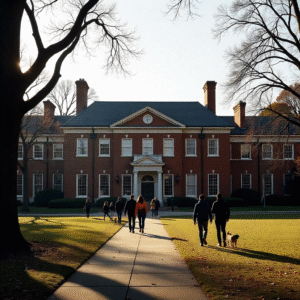
Princeton’s main campus spans over 600 acres in New Jersey, located about an hour from both New York City and Philadelphia. Its environment mixes historic landmarks with modern research spaces.
Nassau Hall, built in the 18th century, represents the school’s history, while centers like the Andlinger Center for Energy and the Environment highlight its modern research ambitions.
Although Princeton doesn’t maintain branch campuses abroad, it partners with universities worldwide, supporting exchange opportunities and collaborative research.
Part-Time Work Rules
Domestic Students: No restrictions on part-time or post-study work.
International Students:
-
On-campus: Up to 20 hours weekly during term, full-time during breaks.
-
Off-campus: Requires CPT (Curricular Practical Training) or OPT (Optional Practical Training).
Career services provide extensive connections with regional and global employers.
Tuition and Living Costs (2025)
-
Undergraduate tuition: Around $62,400 per year.
-
Room & board: About $20,000 annually.
-
Graduate tuition: $25,000–$55,000 depending on program.
-
Living costs: Around $18,000 yearly.
Scholarships & Financial Aid
-
100% need-based aid, with no-loan policies.
-
Families earning below $100,000 often pay little to nothing for tuition and housing.
-
Families with higher income may still qualify for partial aid.
-
International students are considered equally.
-
Most PhD students receive full tuition coverage plus stipends.
Size & Community
-
Student body: Around 8,700 (5,600 undergraduates, 3,100 graduate students).
-
Faculty ratio: 1:5.
-
International students: ~15%, from over 100 countries.
-
Faculty include Nobel laureates, Pulitzer Prize winners, and global leaders.
Academics and Reputation
Princeton consistently ranks among the top universities worldwide.
-
Annual research funding exceeds $400 million.
-
Renowned centers include the Princeton Plasma Physics Lab and Lewis-Sigler Institute.
-
Alumni include U.S. presidents, justices, and CEOs.
-
A liberal arts model ensures undergraduates complete interdisciplinary courses alongside their majors.
Global Rankings (2025)
Princeton is regularly placed in the top 10 globally across multiple ranking systems.
-
Known for leading undergraduate teaching in the U.S.
-
Top tier in STEM, humanities, and social sciences.
-
Particularly strong in public affairs, economics, mathematics, and physics.
Governance and Leadership
Princeton is guided by a Board of Trustees with alumni, faculty, and external members.
-
Current president (2025): Christopher L. Eisgruber.
-
Focus areas: Access, sustainability, and preparing students for global leadership.
Real-Life Example: A Student’s Journey
Maria, an international student from Spain, joined Princeton in 2022. She received generous financial aid that made her education possible. Beyond academics, she performed with the university orchestra, worked as a research assistant, and participated in a summer research exchange in Germany. Her story reflects how Princeton transforms both academic and personal experiences.
Step-by-Step Guide for International Applicants
-
Research programs and aid options early.
-
Prepare translated academic transcripts.
-
Take English proficiency exams if required.
-
Collect financial documents like bank statements and scholarships.
-
Write authentic, thoughtful essays.
-
Submit financial aid forms.
-
Engage with admissions interviews or online sessions.
Tutorial: Securing Admission as an International Student
-
Select your program and concentration.
-
Apply via Common App + supplement (undergraduate) or graduate portal.
-
Upload transcripts, recommendations, and essays.
-
Await admission and Form I-20.
-
Pay SEVIS fee and apply for F-1 visa.
-
Confirm housing (undergrads guaranteed).
-
Arrive in time for orientation in late August.
Conclusion: Your Next Steps Toward Princeton
Princeton is more than an Ivy League university; it is a place where students grow into global leaders, pioneering researchers, and innovators. With its unique balance of tradition and innovation, Princeton equips its students with the tools and network to succeed worldwide.
By understanding its application process, financial aid, housing, and international opportunities, you are better prepared to take the next step toward joining this extraordinary institution.
✅ Next Step: Visit Princeton University’s official website to review detailed program requirements and begin your application. https://www.princeton.edu/