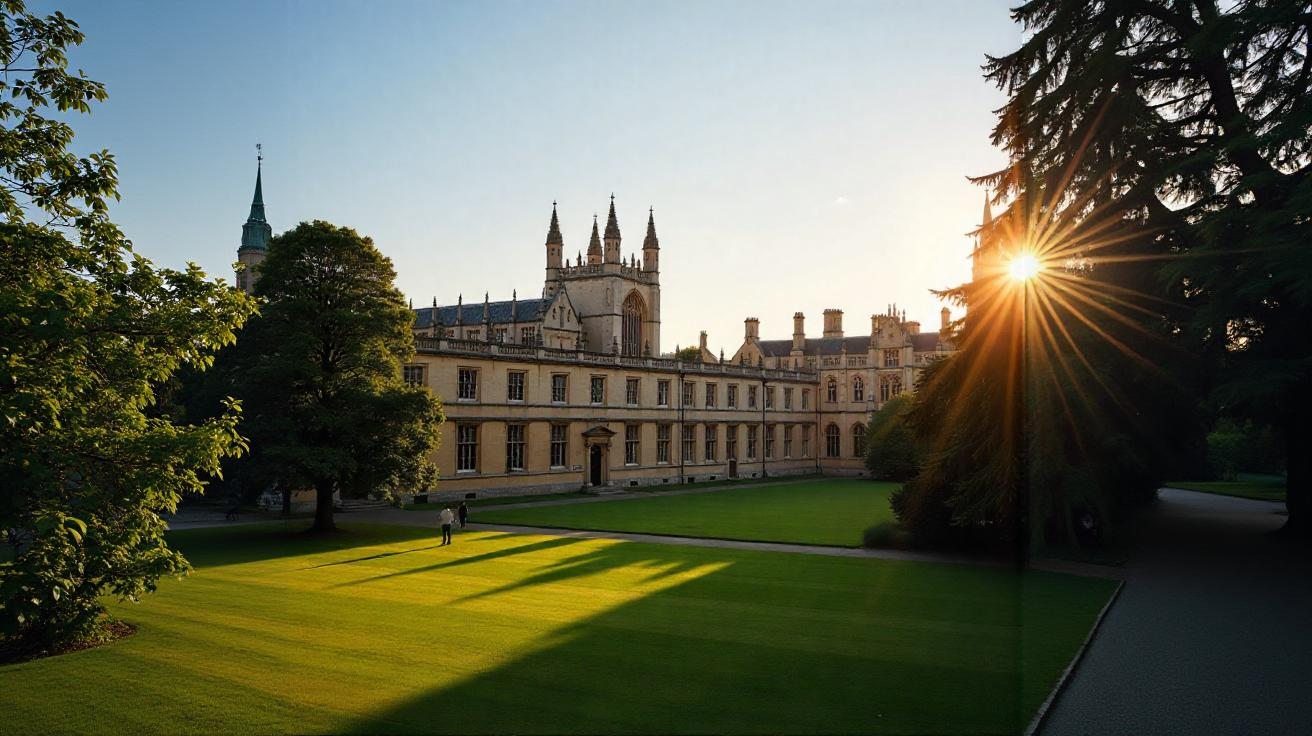
University of Cambridge (UK): The Complete 2025 Student Guide
Introduction: Why Cambridge Remains a Global Icon
The University of Cambridge, founded in 1209, is not just one of the oldest universities in the world—it is a symbol of academic excellence, global influence, and innovation. With a legacy spanning over 800 years, Cambridge has produced Nobel laureates, pioneering scientists, global leaders, and renowned writers.
But Cambridge isn’t just about prestige. It’s a place where students grow intellectually, socially, and personally, building friendships and exploring opportunities that can shape their future. From cobblestone streets and the River Cam to intimate college communities, Cambridge uniquely blends tradition with cutting-edge learning.
This guide covers everything a prospective student needs in 2025, including:
-
Undergraduate and postgraduate programs
-
Application timelines and processes
-
Tuition fees and scholarships
-
Accommodation and living costs
-
Visa requirements and bank statements
-
Part-time work rules and campus life
🏛️ Historical Highlights & Social Initiatives
Founded in 1209, the University of Cambridge is the fourth-oldest university in the world. Its long history reflects centuries of academic excellence and intellectual contribution. The university has produced over 100 Nobel laureates, several prime ministers, and groundbreaking scientists like Isaac Newton and Stephen Hawking.
Social Initiatives:
Cambridge actively promotes diversity and inclusion. Through programs like the Cambridge Access Programme, the university encourages students from underrepresented backgrounds to pursue higher education. Other initiatives focus on outreach in STEM, humanities, and global social development projects, emphasizing research that benefits society.
Degree Programs at Cambridge
Undergraduate Programs
Cambridge offers over 30 undergraduate courses, many with unique structures and depth. Popular choices include:
-
Natural Sciences: Ideal for students fascinated by biology, chemistry, physics, or Earth sciences. Includes lab work, field studies, and interdisciplinary options.
-
Engineering: Combines theory, practical projects, and problem-solving. Globally recognized and professionally accredited.
-
Medicine: A highly competitive program with early clinical exposure, research integration, and hospital placements.
-
Law (LLB): Prepares students for national and international legal careers with practical experiences like moot courts.
-
Computer Science: Focused on AI, machine learning, data science, and modern computational research.
Postgraduate Programs
Cambridge also excels at graduate education, offering:
-
MPhil in Advanced Computer Science
-
MPhil in Digital Humanities
-
LLM (Master of Laws)
-
MBA at Judge Business School
-
PhD opportunities across all faculties
💡 Pro Insight: Many programs are interdisciplinary. Engineering students may study economics, while history students may integrate digital tools for research.
Admission Timelines for 2025
Undergraduate Applications
-
Platform: UCAS (Universities and Colleges Admissions Service)
-
Deadline: 15 October 2025 (6 pm UK time)
-
Applies to both home (UK) and international applicants
Postgraduate Applications
-
Portals open in early September 2025
-
Deadlines vary; most MPhil and PhD programs close between December 2025 and January 2026
📌 Tip: Apply early. Some scholarships and bursaries have early deadlines, and early submissions may help with interviews and funding.
Campus Life and the Collegiate System
Cambridge consists of 31 autonomous colleges, each with its own library, dining hall, chapel, and accommodation. Students belong to a college, which serves as their academic and social home.
Highlights
-
King’s College Chapel: Iconic Gothic architecture and the world-famous Christmas Choir
-
Trinity College: Produced more Nobel laureates than any other college
-
St John’s & Christ’s Colleges: Rich history, gardens, and vibrant student communities
Walking around Cambridge feels like stepping back in time. The city is bike-friendly, scenic, and safe, with cobblestone streets and the River Cam adding to its charm.
Tuition and Fees in 2025
Home (UK) Students
-
Undergraduate tuition: Around £9,535 per year (capped by the government).
-
Postgraduate tuition: Ranges between £12,000–£20,000, depending on the program.
International Students
-
Undergraduate tuition: £25,734–£70,554 per year, with Medicine and Veterinary Medicine being the highest.
-
Postgraduate tuition: £25,000–£55,000 per year, while MBA programs may cost up to £70,000.
💡 Tip: Many scholarships and bursaries are available, which can significantly ease financial pressures.
Scholarships and Financial Aid
Cambridge provides multiple scholarship and funding opportunities for both UK and international students:
-
Cambridge Commonwealth, European & International Trust – Assists around 1,400 students each year with full or partial support.
-
Gates Cambridge Scholarship – Covers tuition, living allowance, travel, and other costs, primarily for postgraduate applicants.
-
Jardine Scholarship – Offered to students from specific Asian countries, covering tuition and living expenses.
-
Chevening Scholarship – A UK government-funded award for postgraduates, which includes tuition, a monthly stipend, and travel costs.
-
Cambridge Trust Undergraduate Awards – Partial financial assistance for international undergraduates who demonstrate financial need.
💡 Tip: Always review course-specific scholarship guidelines and deadlines before applying.
Application Process in Detail
For International Students
-
Choose a Course: Use Cambridge’s course directory to find the right program.
-
Submit Application:
-
Undergraduate: via UCAS
-
Postgraduate: via Cambridge Graduate Application Portal
-
-
Supplementary Forms: Some courses may require additional documents.
-
References & Academic Records: Include transcripts, predicted grades, and reference letters.
-
Proof of English Proficiency: IELTS, TOEFL, or equivalent if English is not your first language.
-
Financial Evidence: Bank statements or proof of funds confirming your ability to pay tuition and living costs.
-
Interviews: Most applicants are interviewed, either online or in person.
For Home Students
-
The process is similar but excludes international financial proof.
-
Eligible for UK government loans and grants.
Bank Statements & Financial Proof
Requirements
-
Proof of tuition fees plus nine months of living costs.
-
Funds must be kept in the account for at least 28 consecutive days before submitting a visa application.
-
Acceptable documents: official bank statements, scholarship confirmation letters, or sponsorship letters.
Estimated Minimum Funds (2025)
| Type | Amount (GBP) |
|---|---|
| Tuition (UG/PG) | £25,000–£70,000 |
| Living costs | £12,000–£15,000 |
| Total | £37,000–£85,000 |
✅ Pro Tip: Ensure your financial documents are official, properly stamped, and clearly dated.
Visa Application Process
-
Apply Online for a UK Student Visa.
-
Required Documents:
-
Valid passport
-
CAS (Confirmation of Acceptance for Studies) from Cambridge
-
Financial proof (bank or scholarship documents)
-
English language certificate
-
-
Processing Time: Generally 3–8 weeks, depending on your country.
-
Work Permissions: International students can work up to 20 hours/week during term-time and full-time during vacations.
💡 Tip: Apply as soon as you receive your CAS to avoid last-minute delays.
Accommodation & Living Costs
-
First-Year Undergraduates: Most colleges guarantee on-campus housing.
-
Upper-Year and Postgraduate Students: Can apply for college housing or seek private rentals.
-
Accommodation Costs: Between £6,000–£10,000 per year.
-
Living Expenses: Approximately £6,000–£8,000 annually for food, transport, and personal spending.
✅ Pro Tip: College housing often provides convenient access to libraries, classes, and student activities.
Part-Time Work Rules
-
International students can work up to 20 hours/week during term-time.
-
Full-time employment is permitted during vacation periods.
-
Common roles include library assistant, lab technician, administrative support, or tutoring.
💡 Tip: Part-time jobs help with daily expenses, but they should not be relied upon to cover tuition fees.
🌍 Global Rankings and Reputation (2025)
Cambridge continues to be one of the world’s top universities:
-
QS World University Rankings 2025: 5th globally
-
Times Higher Education (THE) Rankings 2025: 6th globally
-
Academic Ranking of World Universities (ARWU) 2025: 4th globally
These rankings reflect Cambridge’s excellence in teaching, research output, international diversity, and graduate employability.
🧑🏫 Academics: Strengths and Programs
Cambridge offers a wide range of subjects across multiple faculties, with particular global recognition in:
-
Engineering: Known for innovation and research-led programs.
-
Computer Science: Cutting-edge AI, robotics, and software development studies.
-
Materials Science: Interdisciplinary programs with high-impact research.
-
Natural Sciences & Mathematics: Renowned for the Mathematical Tripos and scientific research excellence.
-
Humanities and Social Sciences: Strong in history, law, philosophy, and economics.
Cambridge combines traditional teaching methods, like supervisions (small group or one-on-one mentoring), with modern research opportunities, giving students a competitive edge globally.
🏠 Size and People
-
Student Body: Approximately 21,000 students, including undergraduates and postgraduates, with over 10,000 international students.
-
Collegiate System: Cambridge is composed of 31 colleges, each with its own culture, accommodation, and academic support.
-
Campus: Picturesque, historic buildings combined with modern facilities, libraries, labs, and recreational spaces.
The collegiate system fosters a close-knit community while maintaining access to world-class academic resources.
🏛️ Governance and Leadership
Cambridge’s governance includes:
-
Regent House: Senior academic staff responsible for major policy decisions.
-
Council: Responsible for strategic planning and university management.
-
General Board of Faculties: Oversees academic standards and faculty regulations.
Leadership is transparent and accountable, combining centuries of tradition with modern administration.
Benefits of Studying at Cambridge
-
Historic Legacy: Over 800 years of academic excellence
-
Global Alumni Network: Graduates in top firms, research labs, and international organizations
-
Supervision System: Personalized guidance through one-on-one or small-group mentoring
-
Research Opportunities: Early involvement in projects enhances career prospects
-
College Community: Social and academic support, lifelong friendships, and unique traditions
How to Prepare for Cambridge
-
Research courses thoroughly
-
Craft a strong personal statement demonstrating curiosity and initiative
-
Practice problem-solving and interview skills
-
Organize financial documents and bank statements
-
Apply for scholarships early
💡 Pro Tip: Cambridge values creativity, resilience, and independent thinking as much as grades.
Cambridge 2025 International Student Roadmap – Full Table
| Phase | Step | Action | Deadline / Timeline | Notes & Tips |
|---|---|---|---|---|
| Research & Planning | 1 | Explore courses & colleges | Jan – Aug 2025 | Use Cambridge Course Directory. Check college restrictions. |
| 2 | Check eligibility | Jan – Aug 2025 | Ensure academic records, English proficiency, and other course requirements are met. | |
| 3 | Plan finances | Jan – Aug 2025 | Estimate tuition, living costs, accommodation, travel, and personal expenses. Identify scholarships. | |
| 4 | Prepare documents | Jan – Aug 2025 | Academic transcripts, reference letters, English test results, personal statement drafts. | |
| Application Submission | 5 | Submit undergraduate application (UCAS + Cambridge Supplementary Form) | By 15 Oct 2025 (6 pm UK time) | Early submission can improve interview and funding chances. |
| 6 | Submit postgraduate application | Sept – Dec 2025 | Via Cambridge Graduate Portal. Deadlines vary by course (MPhil/PhD usually Dec-Jan). | |
| 7 | Apply for scholarships | Sept – Dec 2025 | Many scholarships require separate essays. Check eligibility. | |
| Interview & Offer | 8 | Attend Cambridge interviews | Oct – Dec 2025 | Online or in-person. Focus on thinking style, not just knowledge. |
| 9 | Receive offer | Oct – Dec 2025 | Conditional offers based on final exam results (A-levels, IB, or equivalent). | |
| Visa & Financial Preparation | 10 | Accept offer & receive CAS | Jan – Aug 2026 | CAS required for student visa. |
| 11 | Prepare bank statements/proof of funds | Jan – Aug 2026 | Show tuition + 9 months living costs. Funds must be in account 28 consecutive days. | |
| 12 | Apply for UK Student Visa | Jan – Aug 2026 | Processing time: 3–8 weeks. Include passport, CAS, financial proof, English certificate. | |
| 13 | Arrange accommodation | Jan – Aug 2026 | College rooms preferred for first-year students (£6,000–£10,000/year). | |
| Pre-Departure | 14 | Book flights & travel | July – Sept 2026 | Arrive early for orientation. |
| 15 | Health & insurance | July – Sept 2026 | Register with NHS or arrange private insurance. | |
| 16 | Pack essentials | July – Sept 2026 | Winter clothes, adapters, bicycles optional, laptops, study materials. | |
| 17 | Open UK bank account | July – Sept 2026 | Colleges may assist with account setup. | |
| Arrival & Orientation | 18 | Register with college | Sept 2026 | Complete enrollment and induction. |
| 19 | Attend orientation programs | Sept 2026 | Meet tutors, mentors, and peers. Learn academic expectations. | |
| 20 | Join societies & clubs | Sept 2026 | Engage in extracurriculars, sports, and social events. | |
| 21 | Settle into studies | Sept 2026 | Attend lectures, labs, and supervisions. Balance academics with college life. |
Quick Reference Checklist
-
UCAS / Graduate Application Submitted ✅
-
Cambridge Supplementary Form Completed ✅
-
Personal Statement Ready ✅
-
Academic References Collected ✅
-
IELTS/TOEFL or English Proof Done ✅
-
Bank Statements Prepared ✅
-
CAS Received for Visa ✅
-
Student Visa Applied ✅
-
Accommodation Confirmed ✅
-
Orientation & College Registration Planned ✅
Conclusion: Start Your Cambridge Journey
Studying at Cambridge is a life-changing opportunity. The admissions process may be competitive, and costs are substantial, but the rewards—academic, personal, and professional—are unmatched.
Next Steps:
-
Explore the Cambridge course directory
-
Match your interests with the right program
-
Prepare your applications, bank statements, and visa documents
🌿 Cambridge is more than a university—it’s a place to grow, innovate, and create a future that matters. Start preparing now, and 2025 could be the year your Cambridge journey begins.